


The key difference between THC and CBD is easily explained: THC is psychoactive and responsible for the famous "high," while CBD is non-intoxicating and is celebrated for its balancing, calming qualities. Think of THC as the loud rock star of the cannabis plant and CBD as the laid-back roadie in the background—both belong to the same band, but their performances couldn't be more different.
THC vs CBD: The key differences explained quickly
Even though THC (tetrahydrocannabinol) and CBD (cannabidiol) come from the same plant, they are like mismatched twins. Their chemical formula is identical, but a tiny difference in the arrangement of atoms is the reason why one sends you on a journey and the other gently brings you back down to earth.
THC binds directly to the CB1 receptors in our brain, acting like a DJ turning up the music – resulting in euphoria, altered sensory perceptions, and sometimes a touch of paranoia. CBD is much more subtle. It doesn't bind directly, but rather acts like a system manager, fine-tuning the body's own endocannabinoid system.
CBD is essentially a moderator that maintains balance in the body without impairing mental clarity. THC, on the other hand, directly takes control and actively alters perception.
These fundamental differences in how they work lead to a whole host of consequences – from the areas of application to the legal situation and the completely different consumer experience.
A direct comparison at a glance
This infographic highlights the key differences between THC and CBD. As they say, a picture is worth a thousand words.
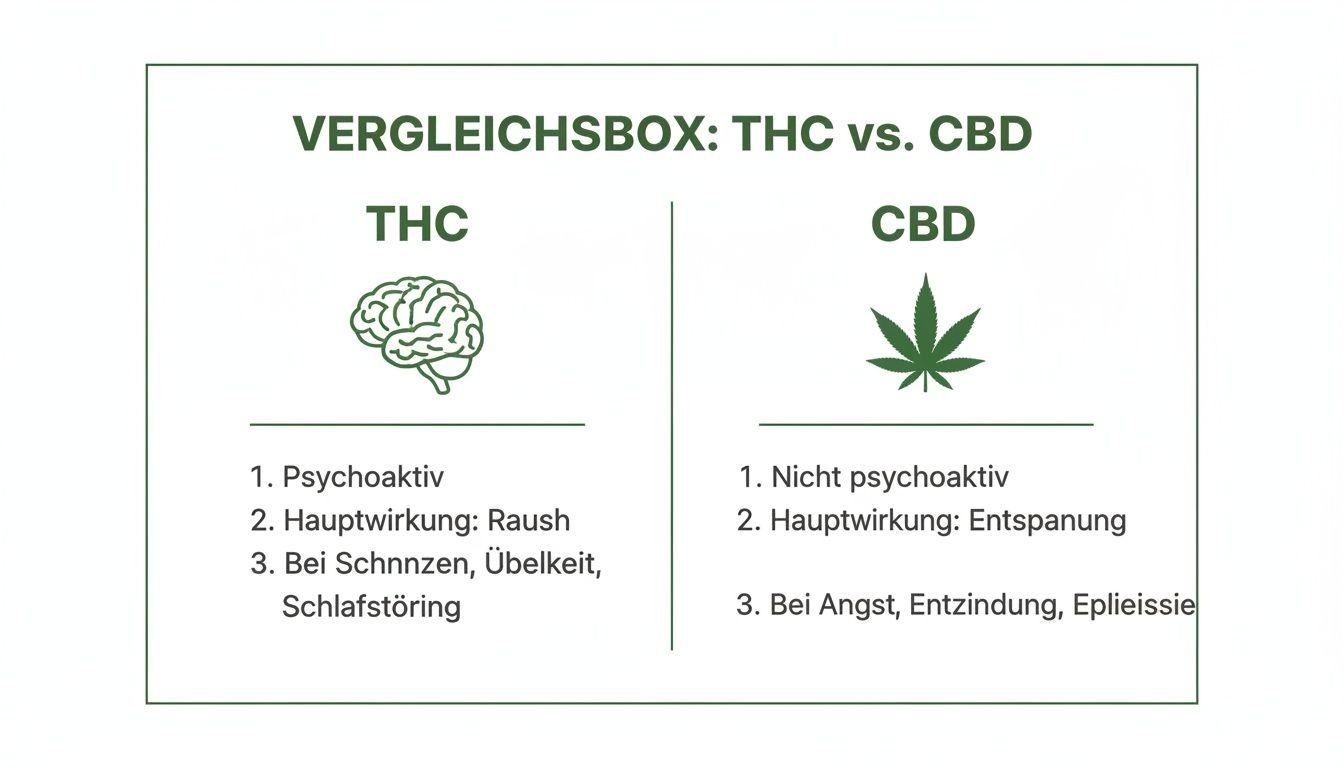
As you can see, the psychoactive effect is the big red line that influences everything else – from legality to application.
The most important contrasts in detail
Now let's get into the fine print. To make the differences truly tangible, we've compiled the most important facts in a clear table. This way you can see at a glance what's what.
THC and CBD in direct comparison
This table shows the key differences between THC and CBD – from their effects on the psyche to their legal status.
| Characteristic | THC (tetrahydrocannabinol) | CBD (Cannabidiol) |
|---|---|---|
| Psychoactivity | Strongly psychoactive, produces a "high" | Not psychoactive, no intoxication |
| Effects on the body | Binds directly to CB1 receptors (brain) | Does it indirectly influence the endocannabinoid system? |
| Typical effects | Euphoria, relaxation, altered perception, increased appetite | Calming, stress reduction, anti-inflammatory, anxiolytic |
| Medical use | Pain therapy, appetite stimulation (e.g. during chemotherapy) | Anxiety disorders, epilepsy, sleep problems, inflammation |
| Legal status (DE) | Subject to the Cannabis Act (CanG), possession and cultivation are regulated | Legal as long as the THC content is below 0.3% |
| Side effects | Anxiety, paranoia, memory problems, dry mouth | Fatigue, changes in appetite, diarrhea (rare) |
| Drug tests | Standard tests specifically search for and detect [something] | Not normally tested for; may contain traces of THC |
The table makes it clear: we're dealing with two completely different tools from the same set. If you'd like to delve even deeper into the subject, take a look at our comprehensive cannabis guide , which provides you with even more exciting information.
How THC and CBD pull the strings in the body
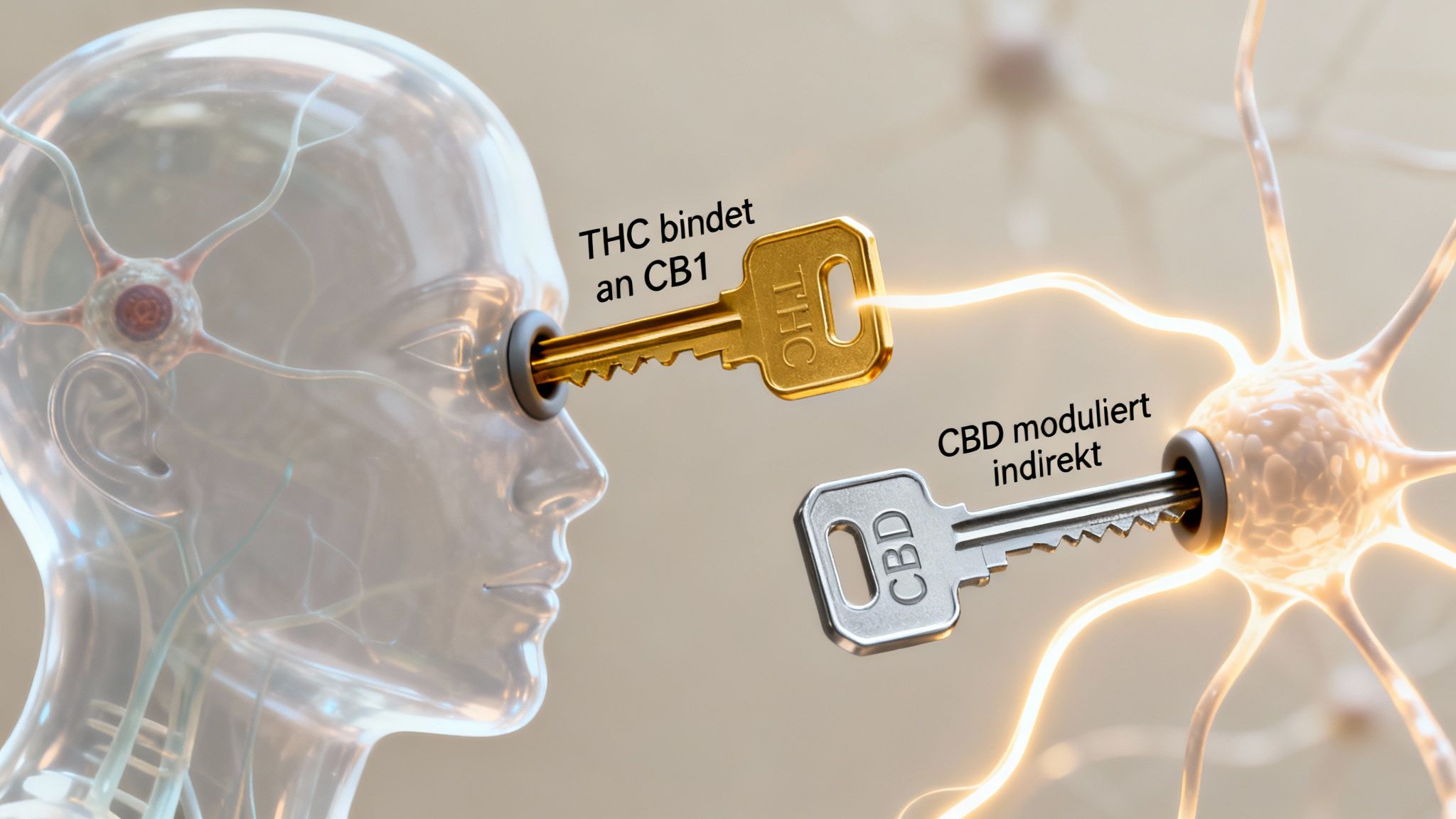
To understand why THC sends you on a journey and CBD gently brings you back down to earth, we need to take a little trip into the control center of our body: the endocannabinoid system (ECS) . Think of it as your body's operating system – an ingenious network that regulates everything from your mood and cravings to your perception of pain.
THC and CBD both interact with this system, but in completely different ways. You could say the ECS is a lock with countless keyholes (the receptors). The two stars of the show are the CB1 receptors , which are mainly located in our brain, and the CB2 receptors , which are more prevalent in the immune system.
THC: The master key to the "high"
THC is the rock star of cannabinoids. It's like the master key that fits perfectly into the keyhole of the CB1 receptors in the brain. As soon as THC docks, it pushes the big red button. Boom! This direct and rather intense connection is the reason for its famous psychoactive effects.
THC essentially hijacks the normal communication between nerve cells. The result is a whole cascade of effects that we know as a "high":
- Euphoria wave: Through the activation of the CB1 receptors, the brain's reward system releases a significant amount of dopamine.
- Perception turned upside down: Time stretches, colors shine more intensely, and music simply sounds… different.
- The munchies: THC stimulates precisely the brain areas responsible for the ravenous hunger.
This direct connection is what makes the effects of THC so immediate and, well, powerful. It grabs the steering wheel directly and reshuffles the cards in the brain for a while.
CBD: The Diplomat in the Background
CBD has a completely different character. Instead of going in guns blazing, it acts more like a skillful conductor or a system moderator in the background. CBD isn't interested in the big stage of the CB1 receptors and doesn't bind directly to them.
Instead, it prefers to quietly pull the strings and cleverly influence the system indirectly:
- It protects the body's own "happy molecules": CBD inhibits the FAAH enzyme, which breaks down our body's own endocannabinoids (such as anandamide). The result? More of the good stuff circulates in the system.
- It acts as a gatekeeper for THC: CBD can slightly alter the shape of the CB1 receptors. This means that THC's "key" no longer fits quite as well, which explains why CBD can mitigate the psychoactive effects of THC.
- It works in tandem with other systems: CBD also interacts with other receptors, such as serotonin receptors. This could be one reason for its relaxing and mood-enhancing properties.
Herein lies the crucial point: THC is an agonist – it forces the receptors to react. CBD is a modulator – it whispers to the system how to restore its own balance (homeostasis) without disrupting perception.
It is precisely this subtle, balancing nature that explains why CBD is not intoxicating, but rather valued for its calming and anti-inflammatory qualities. It helps the body to heal itself. The world of cannabinoids is constantly evolving. If you're curious about newer, related substances, check out our article "What is 10-OH-HHC ?" This knowledge of their different mechanisms of action is key to understanding the various applications and legal frameworks of THC and CBD.
The feeling in everyday life: Psychoactive trip vs. non-psychoactive clarity
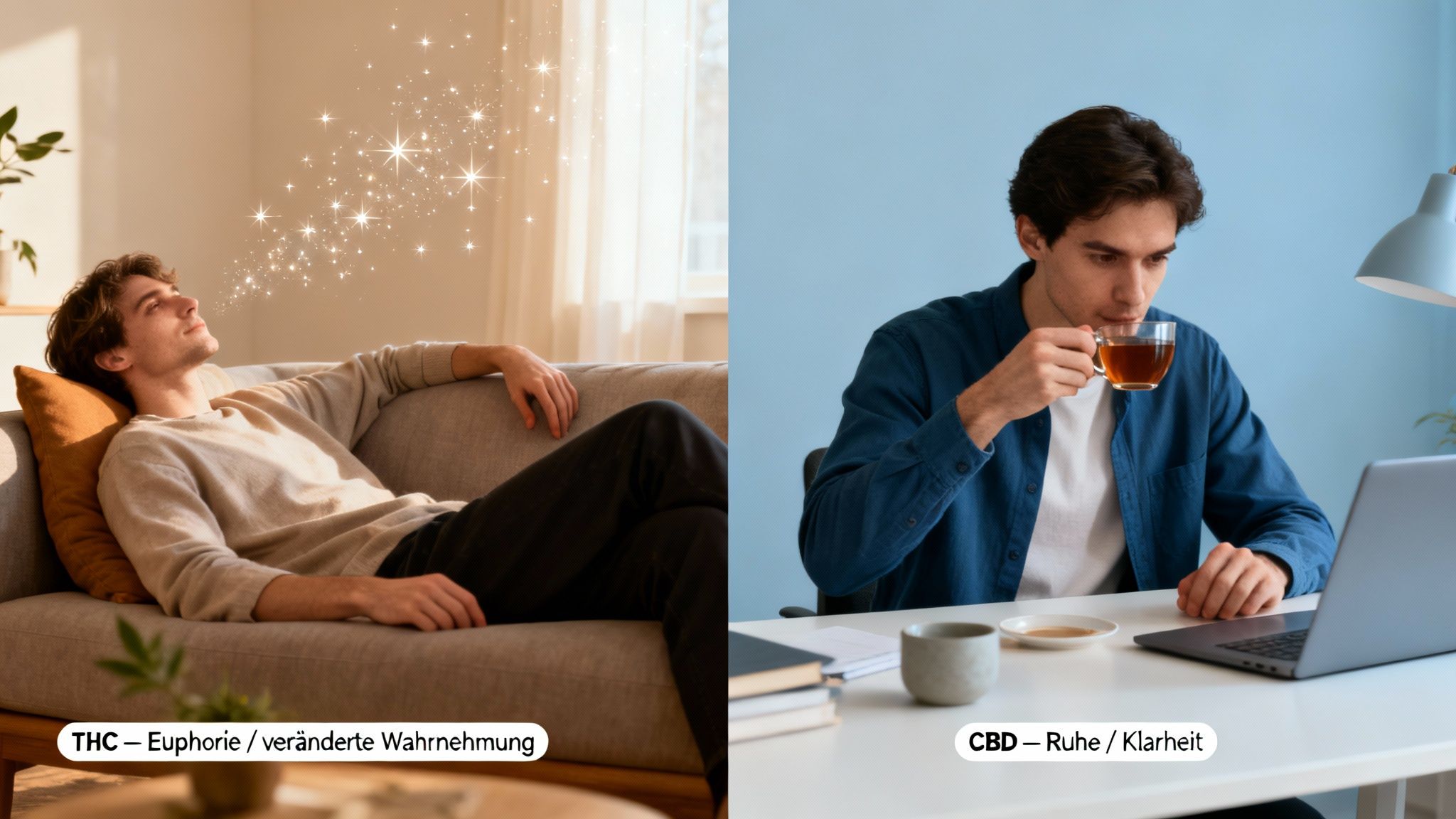
Let's get to the heart of the matter, by far the most important difference between THC and CBD: the personal experience. Let's be honest, beyond molecular structures and receptor whispers, in the end only one question matters: How does it feel? The answer to that determines everything – when, why, and even whether you choose one cannabinoid over the other.
THC is the reason why, for many, "cannabis" is still inextricably linked to the "high." It's the catalyst that thoroughly shakes up perception. CBD, on the other hand, is the rebel that breaks with this notion and offers an experience on a completely different level.
THC: The Journey Within
Imagine your work week has been a marathon, and you've finally crossed the finish line. You put on your favorite playlist, get comfortable on the sofa, and treat yourself to some THC. The effects creep up on you at first, then unfold in gentle waves. Suddenly, you hear bass lines in the music that you'd never noticed before, and a warm feeling of euphoria washes over you.
This experience can feel like this:
- Mind cinema: Your brain becomes the most creative idea factory imaginable. Conversations gain a new depth, jokes land better, and even the biggest problem seems to appear from a different, more solvable perspective.
- Sensory boost: Every bite tastes more intense, colors shine brighter, and the cuddly blanket feels like pure luxury.
- Pure relaxation: Your body becomes pleasantly weightless, tensions dissolve as if by themselves – this is the famous “couch-lock” that lets you sink deep into the cushions.
But of course, this journey also has its pitfalls. For some, the psychoactive ride can turn into anxiety or paranoia. That's precisely why the context is so incredibly important: THC is more suited to a conscious escape in a safe, familiar environment – and definitely not for the hectic hustle and bustle of everyday life.
CBD: The subtle wave of clarity
Now let's fast-forward to a different scenario: You have an important meeting coming up, you're nervous, your thoughts are racing. Instead of THC, you reach for a few drops of CBD oil. There's no sudden high, no mental fireworks. Instead, after a while, you notice a gentle, unobtrusive sense of calm settling in.
The CBD experience can best be described as follows:
- The background noise fades: The constant mental chatter and inner restlessness slow down. You simply feel more centered and present in the here and now.
- Focus without the stress: Your cognitive abilities remain completely intact. You are clear-headed, concentrated, and ready for your tasks – just without that nagging stress hanging over you.
- Physical balance: It feels as if your entire system is being gently recalibrated. A subtle relaxation that comes from within, without making you sluggish.
The crucial difference lies in functionality. THC actively alters your perception, which is often disruptive in everyday life. CBD supports you in functioning better in daily life by reducing disruptive factors such as stress and inner restlessness.
This clear division is also reflected in consumption patterns. The 2023 Epidemiological Survey of Substance Use (EWSD) reveals that in Germany, a staggering 93.9 percent of cannabis users resort to illegal products with a high THC content. In stark contrast, only 24.7 percent use legal products with less than 0.2 percent THC, which are mostly rich in CBD. Interestingly, this figure is almost twice as high for women ( 28.3 percent ) as for men. These figures speak volumes about the different motivations: THC for the high, CBD for well-being. Those who want to delve deeper can read the complete study on cannabis use in Germany here.
Although CBD and THC function so differently, there are also alternative cannabinoids that offer exciting intermediate options. In our article about the effects and experiences of 10-OH-HHC, you can learn more about these fascinating substances. Ultimately, it always comes down to your goal: Are you looking for an experience or support? The answer will lead you either to THC or to CBD.
Health or pleasure? The therapeutic potential of the two stars
THC and CBD have both proven to be real powerhouses for our well-being, but they play on completely different teams. Their strengths are as different as their effects on our brains, which means they take on very distinct roles in medicine and everyday life.
THC is clearly the dominant drug in prescription medicine. Its psychoactive effects are often not just a side effect, but a central part of the therapy. Doctors use it specifically for severe, chronic pain when other medications have long since failed.
For cancer patients, it can be a true blessing. When chemotherapy makes you feel nauseous, THC can alleviate the nausea while simultaneously stimulating your appetite – an invaluable advantage in the fight against the weight loss that accompanies the disease.
CBD: The reliable partner for everyday wellness
CBD, on the other hand, has earned its place as a superstar on the wellness shelf, and for one simple reason: it doesn't get you high . Its superpower lies in its gentle, balancing nature, which makes it the perfect choice for the small and large hurdles of everyday life. Many swear by it to simply cushion the nasty spikes of stress and anxiety at work or in their personal lives.
The crucial difference lies in the application: THC is a potent, medically prescribed treatment for clearly defined medical conditions. CBD, on the other hand, is a readily available everyday aid that promotes general well-being and can noticeably improve quality of life.
It has also proven to be a promising candidate in combating inflammation in the body and is used by countless people to finally get a better night's sleep. One study has shown that CBD can help people fall asleep faster and lengthen the important deep sleep phases. Its use in certain otherwise difficult-to-treat forms of epilepsy in children is truly impressive.
THC vs. CBD: A look at practical applications
To make this more tangible, let's imagine two typical situations:
- Scenario A (THC): A patient with advanced multiple sclerosis is struggling with severe, spastic pain and has lost all appetite. The doctor prescribes a THC medication to address both issues: relieving the pain and restoring the appetite.
- Scenario B (CBD): A student is about to take her final exams, is a nervous wreck, and can't find peace in the evenings. She uses CBD oil to relieve her tension and sleep better at night – without feeling groggy when studying the next day.
These examples clearly illustrate the dividing line. THC is for the heavy artillery when dealing with serious medical problems. CBD provides gentle support for greater balance and serenity amidst the everyday madness of life.
The entourage effect: When the whole orchestra plays
An incredibly fascinating topic that affects both cannabinoids is the so-called entourage effect . Imagine the cannabis plant as a huge orchestra. It contains hundreds of active compounds – not just cannabinoids, but also terpenes (which are responsible for the aroma) and flavonoids. The theory states that these substances work much better together than when isolated individually.
In concrete terms, this means that a full-spectrum CBD oil, which contains not only CBD but also minute traces of other cannabinoids and terpenes, could have a much broader and stronger effect than pure CBD isolate. This ingenious interplay is the reason why so many connoisseurs swear by products that represent the entire spectrum of the plant. It's the difference between a single violin and a full orchestra – the symphony is simply more impressive in the end.
Legal status in Germany: What you need to know
The legal thicket surrounding cannabis can be quite daunting. But don't panic, we'll shed some light on the matter. The crucial difference between THC and CBD is the linchpin that determines its legal status.
The golden rule is actually quite simple: CBD is your legal companion as long as the THC content in the product doesn't exceed a certain threshold. THC-containing cannabis, on the other hand, has been subject to the new, clear regulations of the Cannabis Act (CanG) since April 1, 2024 .
CBD: The legal side of the coin
CBD has an unbeatable advantage in Germany: it doesn't get you high . That's precisely why it's not subject to the Narcotics Act. The legislature has drawn a crystal-clear line: CBD products are legal to sell as long as their THC content remains below 0.3% .
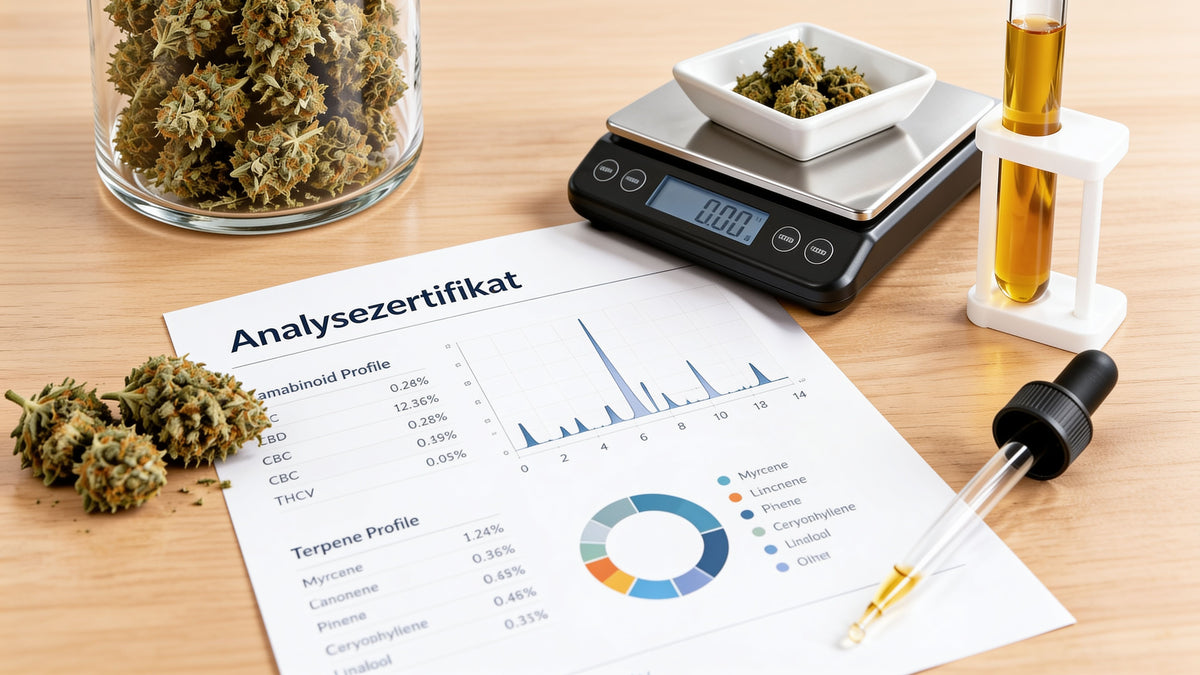
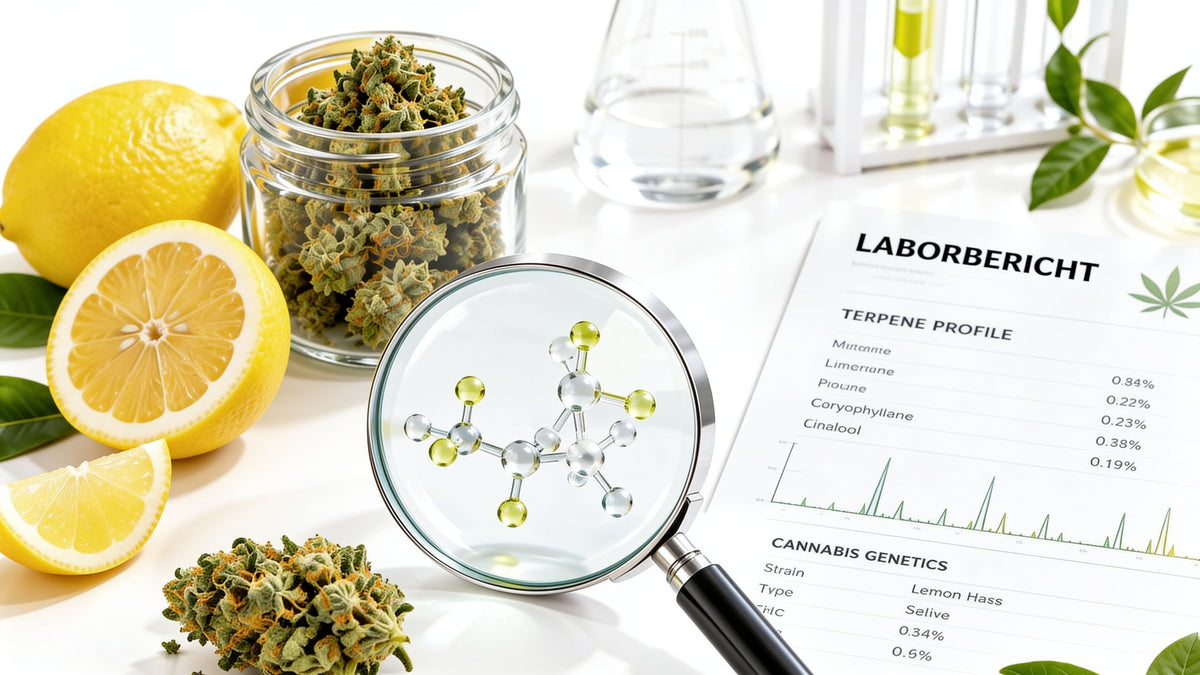
For you, this means: You can legally buy and possess CBD oils, flowers, or gummies. But be careful: Only buy from trustworthy retailers who have their products tested in a laboratory. This is the only way to ensure that the legal limits are actually being met.
THC: The new rules of the CanG
For adults over 18, the new cannabis law has turned things upside down. Private possession and cultivation of THC-containing cannabis are now permitted under certain conditions.
Here are the most important facts at a glance:
- On the go: In public, you are allowed to carry up to 25 grams of cannabis for personal use.
- At home: Possession of up to 50 grams of dried cannabis is legal within one's own four walls.
- Gardening: You are allowed to privately grow up to three female cannabis plants per adult in your household.
The cannabis law is a real turning point. It clearly distinguishes between the legal wellness product CBD and the regulated recreational drug THC. As a consumer, it is your responsibility to know and respect these boundaries.
A crucial point everyone should keep in mind is road traffic. A strict zero-tolerance policy still applies here. The current THC limit in the blood is extremely low – even the smallest amounts can cost you your driver's license.
Why THC content is key
The sharp dividing line between legal CBD and regulated THC is also reflected in consumption patterns. Data from the German Center for Addiction Issues (DHS) shows that the THC content in illegally sold resin skyrocketed by a staggering 174 percent between 2014 and 2023. At the same time, according to the Epidemiological Survey of Substance Use Disorders , 93.8 percent of consumers use THC-rich products, while only 23.8 percent use legal, CBD-dominant strains. Those wishing to delve deeper can find the background to cannabis consumption in Germany in this comprehensive analysis.
These figures clearly illustrate the divide in the market and among consumers. While THC products long dominated the black market, CBD has firmly established itself as a legal alternative for wellness and relaxation. It's therefore crucial that you understand the legal framework. This is especially true for newer cannabinoids. If you're wondering about other substances, check out our article that clarifies whether 10-OH-HHC is legal . Ultimately, your legal security depends on how well-informed you are and how you play by the rules.
Find the right product for your needs
Okay, the theory's there. But how do you navigate the jungle of cannabis products? The shelves are crammed with flowers, vapes, oils, and gummies – and each one promises the moon. Choosing the right product is almost as crucial as choosing between THC and CBD itself. Why? Because the method of consumption determines how quickly and for how long the effects actually kick in.
Imagine you come home after a stressful day and need to relax immediately . Do you reach for an oil that takes an hour to kick in, or would you rather use a vape that calms you down in minutes? This decision makes all the difference. Each method has its advantages and disadvantages and is suited to very different situations.
Speed and duration: The two decisive factors
The biggest difference between all these colorful packets lies in their bioavailability and the time it takes for them to take effect . It sounds terribly scientific, but it's incredibly simple: it's simply about how quickly the active ingredient gets into your bloodstream and how long it stays there.
-
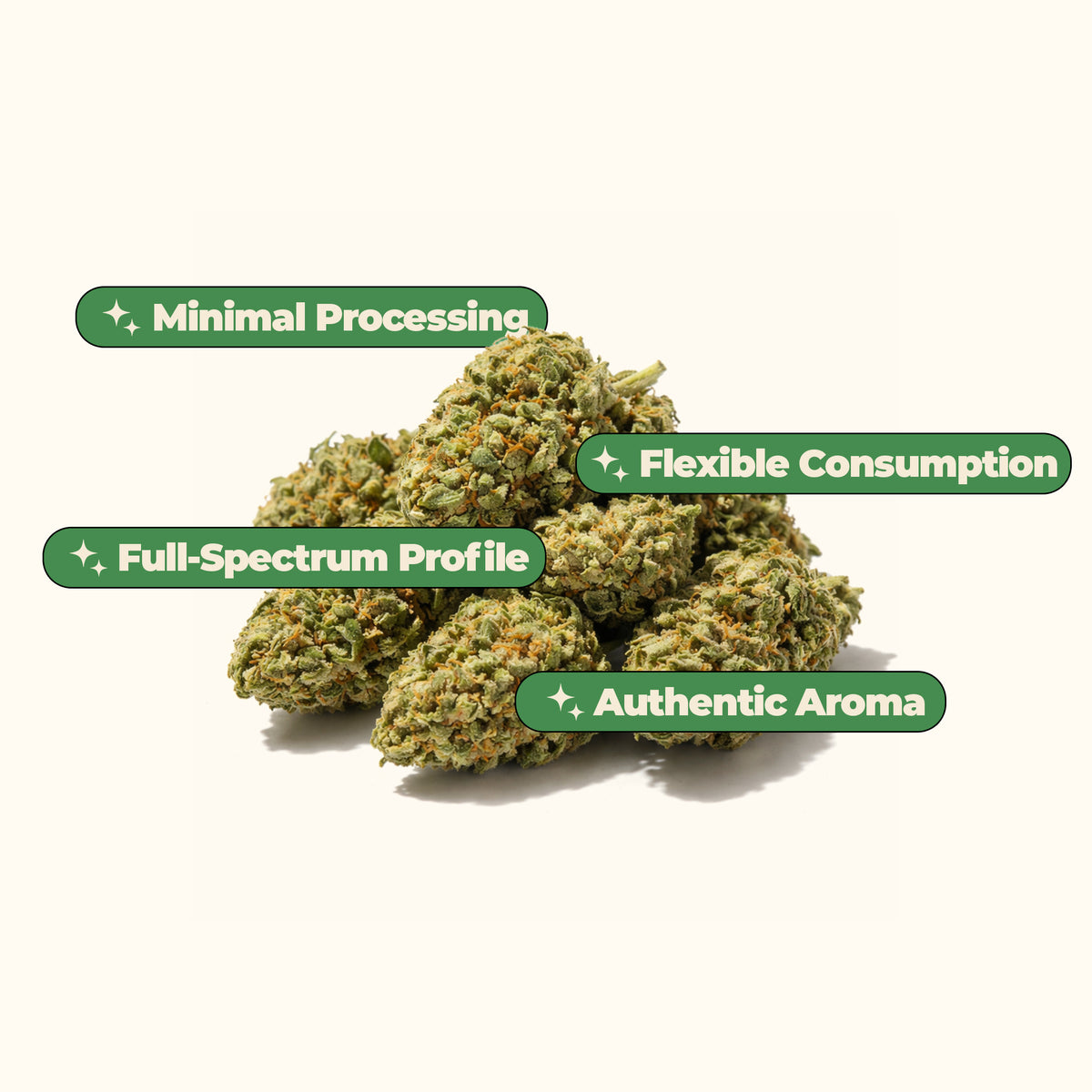
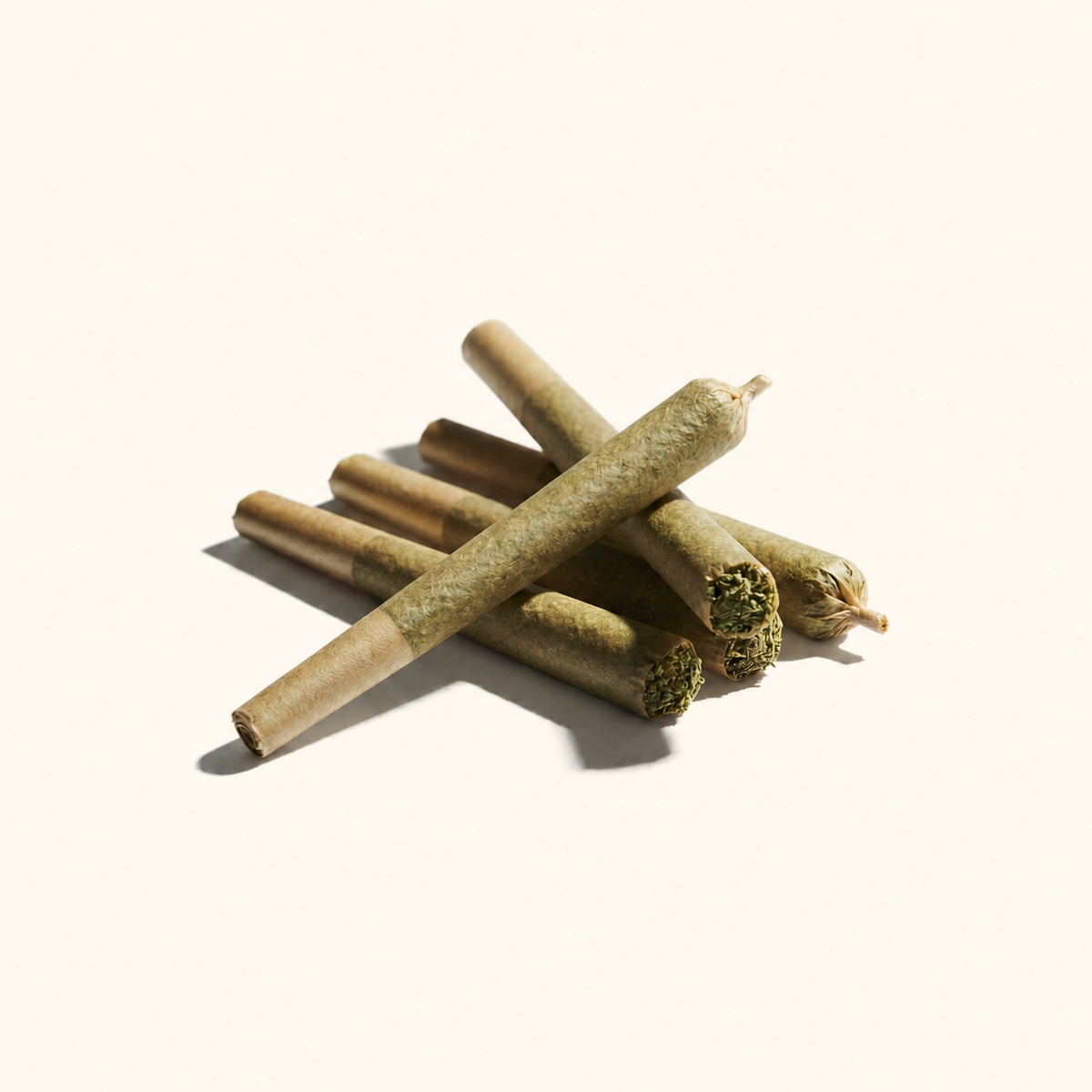
Inhalation (vapes & flowers)
- Onset of effect: Practically immediate, you will feel it within 1–5 minutes .
- Duration of effect: A rather short-lived pleasure, usually only 1–3 hours .
- Perfect for: Acute situations. The sudden stress attack, the quick wind-down in the evening – here you need something that kicks in immediately and whose effect you can directly control.
-
Sublingual absorption (oils & drops)
- Onset of effect: Gentle, after about 15–45 minutes .
- Duration of effect: Lasts significantly longer, often 4–6 hours .
- Perfect for: Gentle, long-lasting support. Ideal for maintaining a consistent level of calmness throughout the day without the need for constant reapplication.
-
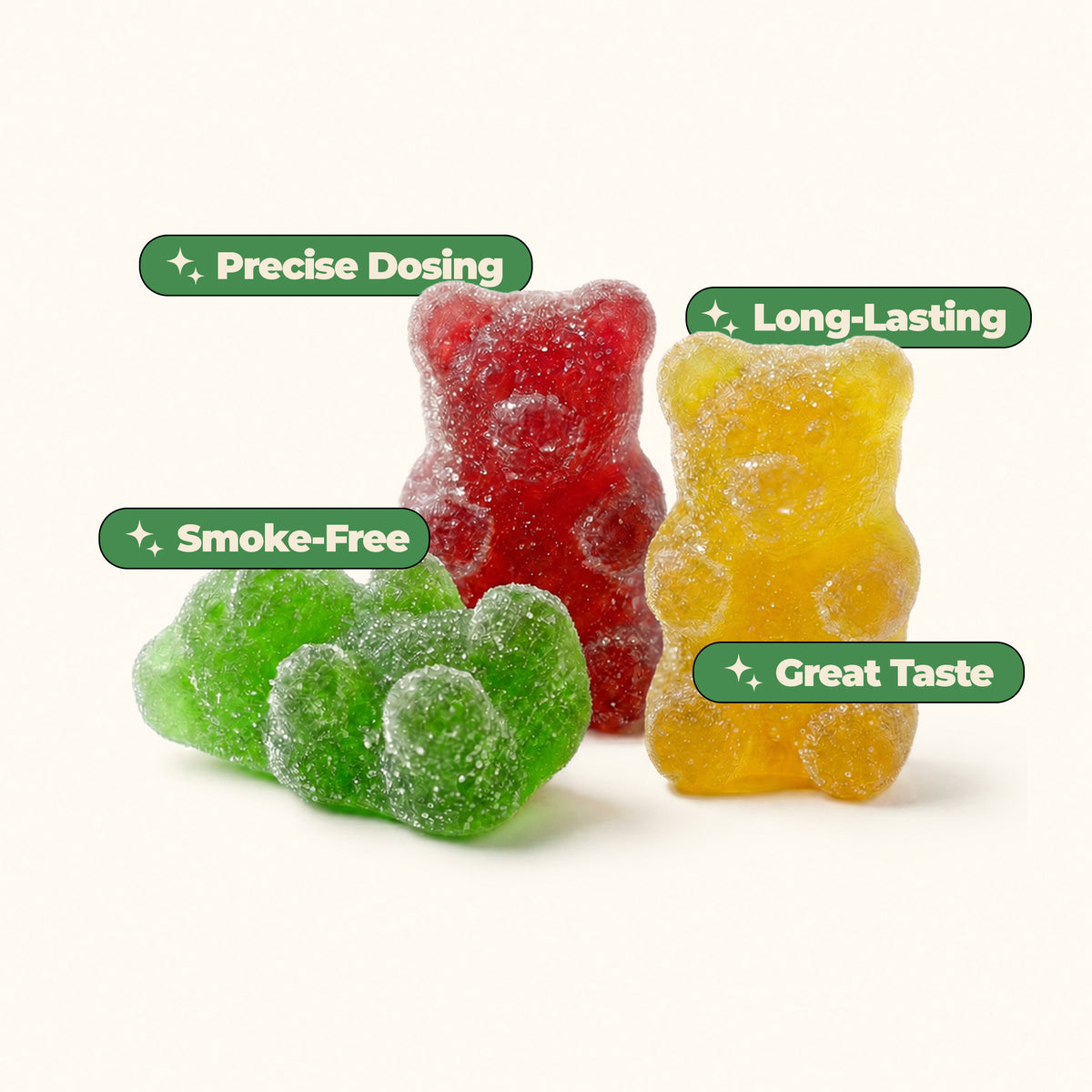
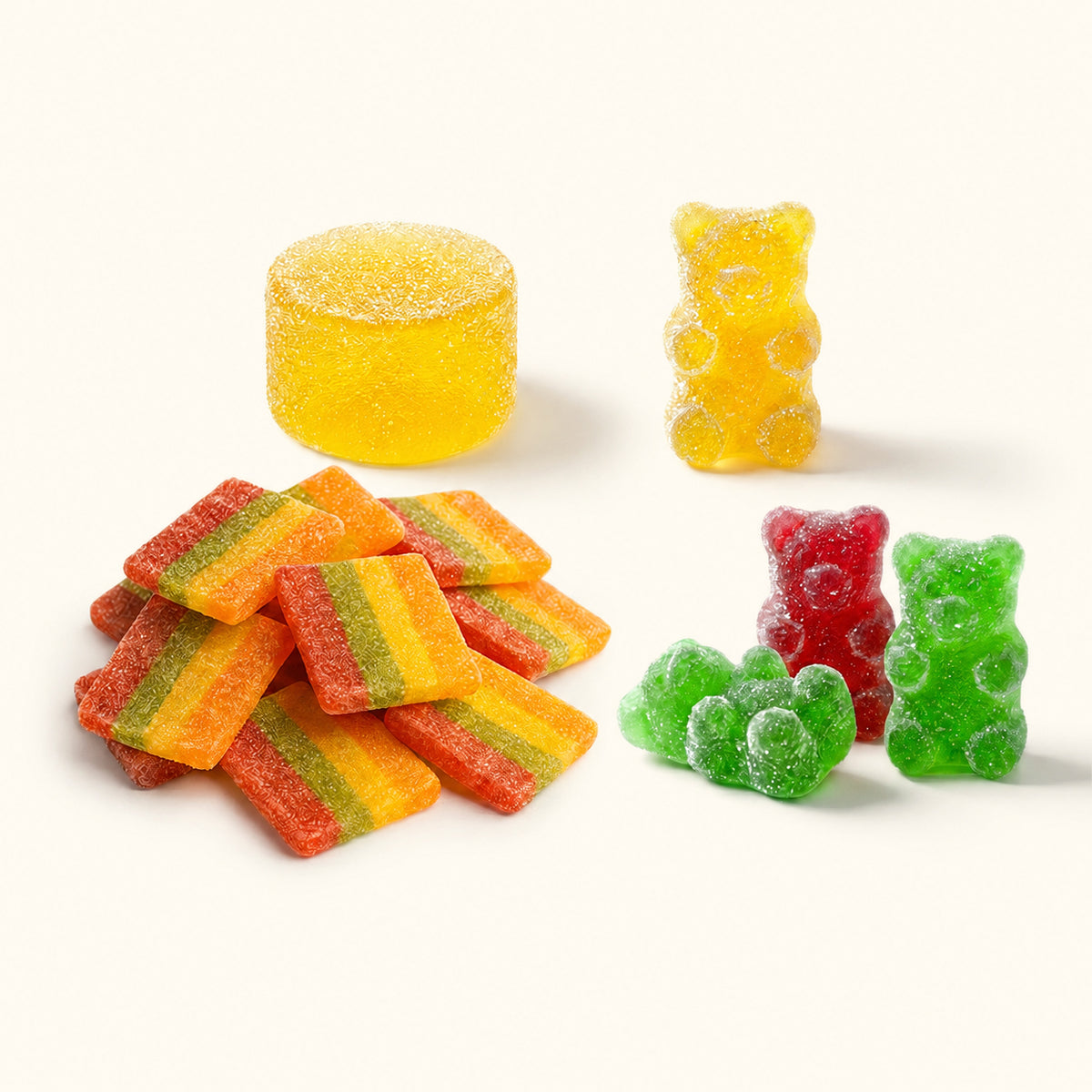
Oral intake (gummies & capsules)
- Onset of action: The slowest of the bunch, after 45–90 minutes , as the active ingredient first has to pass through the gastrointestinal tract.
- Duration of effect: But also the longest, often 6-8 hours or even more.
- Perfect for: The marathon, not the sprint. For example, to be able to sleep through the whole night without waking up in between.
Your choice therefore depends directly on your goal. If you're looking for a quick fix for a short time, inhalation is your best friend. However, if you need stable, long-lasting support, oils or edibles are the much smarter choice.
Specific scenarios: How to make the right choice
Let's make this practical. Here are a few typical real-life situations and which product is best suited to them.
Situation 1: The after-work chill Long workday, your mind is still racing. You just want to lie down on the couch, put on a movie and switch off – right now, not sometime later.
- Your best choice: A CBD vape or CBD flowers .
- Why? The effect hits you almost immediately. You don't have to wait forever for relaxation to set in; you feel the effect directly. And since the effect is shorter-lived, you won't be completely groggy the next morning.
Situation 2: The stressful workday Your calendar is packed with meetings and deadlines. You want to create more inner peace from the outset, without losing your concentration or getting tired.
- Your best choice: CBD oil .
- Why? A few drops under the tongue in the morning provide a consistent effect that lasts for hours. This dampens the annoying background noise of stress and helps you stay focused and calm throughout the day.
Situation 3: The restless night You toss and turn in bed for hours before you can fall asleep, and you keep waking up. A real nightmare.
- Your best choice: CBD gummies or capsules .
- Why? If you take them about an hour before bedtime, the effect develops slowly but lasts throughout the entire night. This sustained release not only helps you fall asleep, but more importantly, it helps you stay asleep.
The sheer number of options can be overwhelming at first, but it's also a huge opportunity. With this knowledge, you can now specifically choose the product that perfectly fits your life and your needs. If you're curious and want to explore a selection of high-quality, lab-tested products, you'll find a wide range of legal CBD products for every application. This way, you can be sure you're making an informed decision.
The most pressing questions about THC and CBD – answered briefly and painlessly
Even after all the theory, a few questions often still linger in your mind. That's perfectly normal! That's why we've compiled the classic questions for you here and provide the answers – no fluff, straight to the point.
Is CBD addictive?
This is probably the biggest concern for many newcomers. The answer is a clear and resounding: No. Unlike THC, CBD has virtually no addictive potential. This is even confirmed by the World Health Organization (WHO), which has determined that CBD does not cause addiction in humans. So you can incorporate it into your daily life without any worries.
Can I get high from CBD?
Absolutely not. That's precisely the crucial point when we ask what the difference is between THC and CBD . The intoxicating "high" is solely the domain of THC. Since legal CBD in Germany must contain less than the 0.3% THC limit, a high is physically impossible. You therefore always remain in control of your senses.
Don't think of CBD as a drug, but rather as the exact opposite. It doesn't alter your perception, but helps you achieve a clear, calm, and focused mind. A bit like mental de-stressing, but without the side effects.
Will a drug test show up positive for CBD?
Standard drug tests, like those used by the police or employers, are calibrated for only one thing: THC and its metabolites. CBD isn't even on the list of substances tested for and therefore won't lead to a positive result.
There is one small caveat regarding full-spectrum products. While they contain only tiny, legal traces of THC, someone consuming large quantities daily could theoretically accumulate enough to trigger a positive test. Therefore, anyone who requires 100% certainty is best advised to opt for broad-spectrum or isolate products, which are guaranteed to be THC-free.
Can CBD and THC be taken together?
Absolutely – and that's often the best idea! This is precisely where the famous entourage effect comes into play. CBD has the wonderful property of smoothing out the sometimes unpleasant edges of THC. It can therefore significantly reduce typical side effects like a racing heart or mild paranoia. Think of CBD as the calm friend who stands by THC's side, ensuring a more pleasant experience all around.
Does CBD really help with falling asleep?
Countless people swear by it. But CBD isn't a sledgehammer like classic sleeping pills that simply knock you out. It works much more subtly and tackles the problem at its root: all the things that keep you awake at night – stress, inner restlessness, the constant mental chatter.
CBD helps calm the nervous system. This allows you to drift off to sleep more gently and, more importantly, improves the quality of your deep sleep. One study showed that participants not only fell asleep faster but also felt noticeably more rested the next morning. It's essentially a gentle boost for a more natural night's rest.
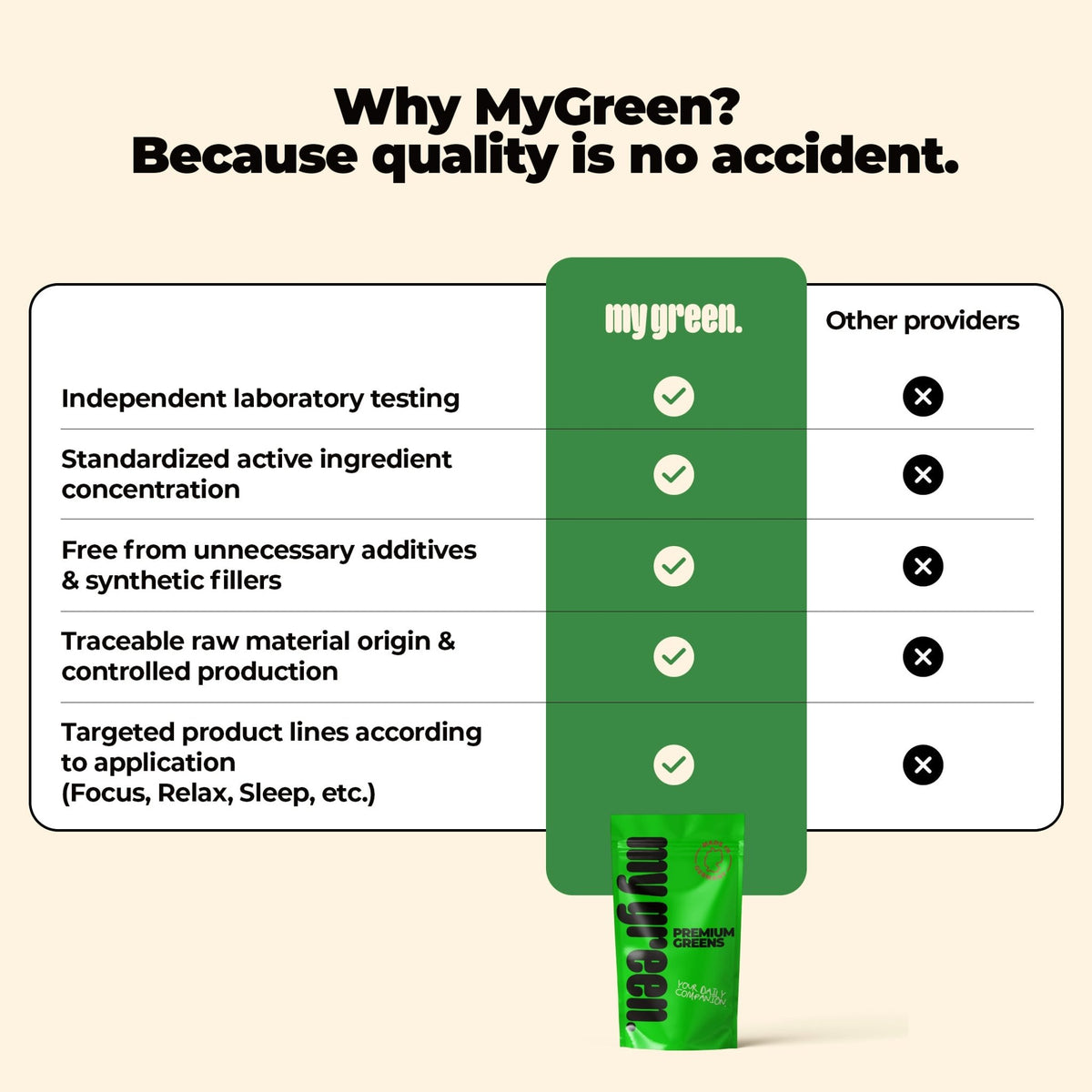
At MYGREEN you'll find a huge selection of lab-tested, legal cannabinoid products, sealed with our Fresh-Lock process to guarantee maximum freshness and potency. Discover the variety now and order discreetly and securely at https://shopmygreen.com .
Article created using Outrank





Is 10-oh-hhc legal in Germany? A simple explanation.
Was sind synthetische cannabinoide und warum sind sie so gefährlich